Florida's Secret Weapon Against Giant Killer Snakes: How Robotic Rabbits and Artificial Intelligence Could Change Wildlife Conservation Forever
ENVIRONMENT • WILDLIFE CONSERVATION • TECHNOLOGY
The Robot Rabbit Revolution: How Florida Is Using Artificial Intelligence and Robotics to Fight Giant Invasive Pythons and Protect Wildlife in 2026
Published: November 22, 2026 | Reading Time: Approximately 12–15 Minutes
Imagine walking through a vast tropical wetland and suddenly discovering something that looks like an ordinary rabbit sitting quietly among the vegetation. It has soft artificial fur, a realistic body temperature, and movements resembling those of a living animal.

But this is no ordinary rabbit. It is a robot.
And its mission is extraordinary: helping scientists locate and remove some of the largest invasive snakes threatening one of America's most important natural ecosystems.
In Florida, researchers are exploring an unusual combination of wildlife science, robotics, solar energy, artificial intelligence, and environmental conservation to address the growing challenge of invasive Burmese pythons.
The project, developed through collaboration involving the University of Florida and the South Florida Water Management District, is attracting international attention because of its unconventional approach to wildlife management.
Instead of relying exclusively on people searching through enormous wetlands for well-camouflaged snakes, researchers are experimenting with artificial rabbits designed to attract the predators to monitored locations.
Could a robotic animal become an important tool in protecting endangered wildlife? Could artificial intelligence help conservationists respond more effectively to invasive species?
This fascinating development raises important questions about the future of environmental protection.
A New Chapter in Wildlife Conservation
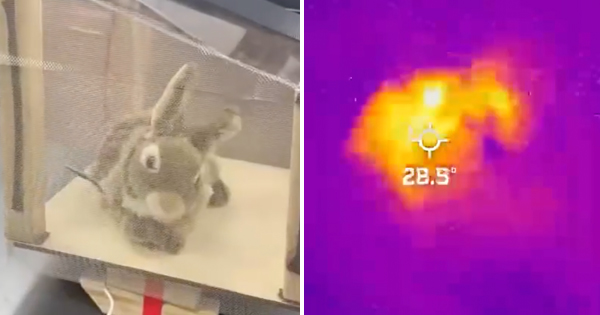
Image credit: South Florida Water Management District.
The robotic rabbit initiative represents an innovative attempt to solve a difficult environmental problem.
Florida's Everglades is an extraordinary wetland ecosystem containing a remarkable diversity of plants, birds, reptiles, fish, and mammals.
However, the ecosystem has experienced serious ecological pressure from non-native Burmese pythons.
These large constrictor snakes have established breeding populations in southern Florida, where they prey on numerous native animals.
Their ability to hide among dense vegetation, move through wetlands, and remain undetected makes conventional removal operations extremely challenging.
Scientists therefore began exploring whether technology could help bring these hidden predators closer to locations where trained wildlife professionals could detect and remove them.
The result was the development of robotic rabbit decoys designed to imitate some of the characteristics of real marsh rabbits.
1. Why Is Florida Fighting Burmese Pythons?
To understand the importance of this technological experiment, it is necessary to understand the animal behind the problem.
The Burmese python (Python bivittatus) is a large snake native to Southeast Asia.
In its natural environment, the species occupies a variety of habitats, including tropical forests, grasslands, marshes, and wetlands.
Unfortunately, the species has also become established outside its native range.
In southern Florida, the expansion of Burmese pythons is associated largely with the exotic pet trade. Some escaped from captivity, while others were released into the wild.
The warm climate and extensive wetlands of the Everglades provide suitable conditions for these snakes to survive and reproduce.
Why Are They Considered Invasive?
An invasive species is a non-native organism that establishes itself in a new environment and causes, or is likely to cause, ecological, economic, or other harm.
Burmese pythons are particularly concerning because they are powerful predators capable of consuming a wide variety of animals.
Their diet may include:
- Marsh rabbits and other small mammals.
- Raccoons and opossums.
- Birds and their eggs.
- Reptiles and amphibians.
- Other available wildlife.
The problem is not simply that these snakes are large. It is that their presence can alter relationships between native predators and prey, placing additional pressure on an already sensitive ecosystem.
2. How Do Robotic Rabbits Actually Work?
The technology behind the project is fascinating because it combines several different biological signals that predators use when searching for food.
The robots are modified toy rabbits fitted with mechanical components designed to imitate certain characteristics of living marsh rabbits.
A. Artificial Body Heat
Warm-blooded animals produce body heat. Burmese pythons possess specialized heat-sensitive structures that help them detect warm prey.
The robotic rabbits therefore include small heating systems designed to produce a heat signature resembling that of a living mammal.
B. Scent Technology
Smell is another important part of how many snakes investigate their surroundings.
The robotic rabbit project uses mammalian scent to make the artificial animals more attractive to approaching pythons.
Researchers have also explored improved scent-distribution systems, including small fans and additional scent sources positioned away from the robot.
C. Realistic Movement and Vibrations
A real rabbit does not remain completely motionless. It may move its body, shift position, or produce vibrations through contact with the ground.
The robotic devices are designed to reproduce some of these signals through mechanical movement and other features.
D. Solar-Powered Technology
One of the most interesting features is the use of solar energy.
Solar-powered systems can help operate equipment in remote wetland locations where conventional electricity may be difficult to access.
This is particularly important in the Everglades, where researchers must work across large areas of challenging terrain.
E. Cameras and Artificial Intelligence
The robotic rabbits are placed in protective enclosures monitored by cameras.
When a python approaches, monitoring systems are designed to help identify its presence and alert wildlife officials.
Researchers are also developing improved software to identify approaching snakes more efficiently.
The intention is to reduce the time between detecting a python and sending a trained removal professional to the location.
The robotic rabbits do not independently hunt, capture, or kill snakes. Their purpose is to attract and help detect pythons so that trained professionals can respond.
3. Why Is Finding Burmese Pythons So Difficult?
One of the greatest challenges facing Florida's wildlife managers is not necessarily removing a python after it has been discovered. It is finding the animal in the first place.
Burmese pythons have patterned skin that helps them blend into their surroundings.
They can remain hidden among grasses, muddy wetlands, tree roots, and other vegetation.
This makes searching for them extremely difficult, even for experienced wildlife professionals.
The Everglades also covers an enormous area, with many locations that are difficult to reach on foot.
By attracting pythons towards monitored locations, researchers hope to make the detection process more efficient.
Rather than searching endlessly for an animal that may be hiding nearby, wildlife teams can concentrate some of their efforts around strategically placed monitoring equipment.
4. The Latest Developments: What Has Happened in November 2026?
The robotic rabbit project has continued to evolve since its initial field deployment in 2025.
According to a November 17, 2026 report by USA TODAY Network, researchers had approximately 79 functional robotic rabbits available as of the summer of 2026.
The equipment has undergone several modifications intended to improve its performance in the challenging Everglades environment.
These improvements include:
- Improved scent-distribution systems.
- Small fans designed to spread mammalian scent.
- Additional scent sources to increase the area covered.
- Improved camera monitoring systems.
- Software upgrades intended to identify approaching pythons more rapidly.
- Design improvements to help the equipment withstand outdoor conditions.
Has the Experiment Successfully Captured Pythons?
This is where scientific accuracy becomes particularly important.
Despite the technological improvements, the November 2026 report indicated that the robotic rabbit project had not yet demonstrated successful python captures using the artificial rabbits.
In other words, the technology remains experimental.
The absence of demonstrated captures does not necessarily mean that the project has no future. It means researchers still need convincing evidence that the approach can consistently attract, detect, and help remove pythons under real-world conditions.
This is an important reminder that scientific innovation requires experimentation, patience, evaluation, and sometimes redesign.
5. The Environmental Consequences of Invasive Pythons
The Everglades is not simply a wetland. It is a complex natural system in which thousands of organisms interact.
Every species contributes to the functioning of the ecosystem, whether by controlling other animal populations, dispersing seeds, pollinating plants, or providing food for predators.
When a powerful invasive predator becomes established, these relationships can change dramatically.
Declining Native Mammal Populations
Research conducted in southern Florida has documented substantial declines in sightings of several native mammals in areas where Burmese pythons became established.
Affected species include raccoons, opossums, rabbits, and other small mammals.
These declines matter because native mammals play important roles in food webs and ecosystem processes.
Pressure on Native Predators
Native predators also depend on healthy populations of smaller animals.
Florida panthers, bobcats, and birds of prey rely on different prey species to survive.
When invasive pythons reduce the availability of native mammals, the effects can extend beyond the animals directly consumed by the snakes.
A Threat to Biodiversity
Biodiversity refers to the variety of living organisms within an ecosystem.
Healthy biodiversity contributes to ecological stability and helps natural systems respond to environmental changes.
The spread of invasive species can threaten biodiversity by changing population sizes, food availability, and relationships between organisms.
Protecting native wildlife is therefore an essential part of maintaining the ecological health of the Everglades.
6. Are Robotic Rabbits the Only Solution?
No. Florida's strategy against invasive Burmese pythons involves several different approaches.
Robotic rabbits are only one experimental tool within a much broader wildlife management effort.
Professional Python Removal Teams
Trained contractors and experienced python hunters search for and remove invasive snakes from designated areas.
Their work remains important because locating and safely handling large constrictor snakes requires specialized knowledge and equipment.
Radio-Tracking Technology
Scientists also use radio telemetry to monitor selected snakes.
Some male pythons are fitted with tracking devices. Their movements can help researchers locate breeding groups, including females.
This technique is sometimes associated with the Judas snake or scout snake approach.
Public Participation
Florida also organizes the annual Florida Python Challenge, which encourages trained participants to help remove invasive Burmese pythons.
The programme raises awareness about invasive species while giving participants an opportunity to contribute to conservation efforts under official rules.
Together, these methods demonstrate why successful invasive-species management often requires a combination of science, technology, professional expertise, and public awareness.
7. Could Artificial Intelligence Transform Wildlife Conservation Worldwide?
The Florida robotic rabbit experiment raises a much bigger question: how can emerging technologies help protect wildlife in different parts of the world?
Across the globe, conservationists are increasingly exploring technological solutions to environmental challenges.
AI-Powered Wildlife Cameras
Camera systems equipped with image-recognition technology can help identify animals in remote habitats.
Instead of requiring researchers to inspect every photograph manually, automated systems can help sort images and identify potential wildlife sightings.
Drones for Environmental Monitoring
Drones can help researchers observe forests, wetlands, coastlines, and other difficult-to-access environments.
They can support habitat surveys, monitor changes in vegetation, and help identify certain environmental threats.
Satellite Technology
Satellite observations provide valuable information about deforestation, land-use changes, fires, flooding, and habitat loss.
These tools can help conservation organizations identify environmental changes over large geographical areas.
Smart Sensors
Environmental sensors can monitor temperature, humidity, water quality, and other conditions that influence ecosystem health.
When combined with data analysis, these technologies can help scientists understand how natural environments change over time.
The Florida experiment illustrates how technology developed for one environmental challenge may inspire new ideas for conservation elsewhere.
8. Lessons for Africa and Other Regions of the World
Although the robotic rabbit project is taking place in Florida, its broader lessons are relevant internationally.
African countries, Asian nations, European conservation programmes, and environmental organizations across the Americas face different wildlife management challenges.
In Africa, for example, conservationists work to protect elephants, rhinoceroses, mountain gorillas, lions, forest ecosystems, and numerous threatened bird species.
In Asia, environmental programmes address habitat destruction, illegal wildlife trafficking, invasive species, and the protection of endangered animals.
In Europe, conservationists monitor changing ecosystems, invasive organisms, and biodiversity loss.
Technology cannot solve every environmental problem, but it can provide additional tools for research, monitoring, and decision-making.
The most important lesson is that conservation should combine scientific knowledge, local expertise, responsible technology, and long-term environmental planning.
For countries with limited conservation budgets, affordable monitoring systems and carefully designed technological solutions may become especially valuable.
9. The Ethical Questions Behind Robotic Wildlife Technology
Technological innovation must also be evaluated responsibly.
Using artificial animals to attract predators raises important questions about animal welfare, environmental safety, and the possible effects on other species.
Could Other Animals Be Attracted?
A scent or movement designed to attract one species may also attract other animals.
Researchers therefore need to consider possible unintended interactions and ensure that monitoring systems do not create additional ecological problems.
What Happens When the Equipment Breaks?
Robotic devices placed in wetlands must withstand rain, heat, humidity, flooding, and wildlife interactions.
Damaged batteries, electronic components, and artificial materials must be managed responsibly to prevent additional environmental pollution.
Does Technology Replace Human Expertise?
No. Technology can help researchers collect information and identify potential problems, but trained professionals remain essential.
Scientific interpretation, animal welfare decisions, and safe wildlife removal require human knowledge and responsibility.
10. What Can Ordinary People Do to Protect Wildlife?
Wildlife conservation is not only the responsibility of scientists and governments.
Individuals, families, schools, communities, businesses, and environmental organizations all have a role to play.
Here are some practical actions that can make a difference:
- Never release unwanted exotic pets into the wild. Contact appropriate animal authorities or licensed rescue organizations for responsible alternatives.
- Protect natural habitats. Support responsible land management and environmental restoration.
- Learn about invasive species. Understanding which organisms threaten local ecosystems can help communities respond appropriately.
- Support scientific research. Responsible conservation research improves our understanding of environmental challenges.
- Teach children about biodiversity. Environmental education helps build a generation that understands the importance of nature.
- Share reliable environmental information. Accurate information can inspire more people to participate in conservation.
- Support responsible wildlife organizations. Choose credible programmes that demonstrate transparency and measurable conservation objectives.
11. The Future: Can Robots Help Restore the Balance of Nature?
The future of environmental conservation may increasingly involve cooperation between humans, scientific research, and intelligent machines.
Robots may help monitor remote forests, underwater ecosystems, protected wetlands, and endangered animal habitats.
Artificial intelligence may help researchers process enormous amounts of environmental information.
Solar-powered monitoring devices may make it easier to collect data in locations where traditional infrastructure is unavailable.
However, technological progress should never distract us from the fundamental importance of protecting natural habitats and preventing environmental damage in the first place.
The Florida robotic rabbit experiment is an interesting example of scientific creativity. It also demonstrates that innovative ideas must be tested carefully before they can be considered successful conservation solutions.
Whether these artificial rabbits eventually become an effective tool against Burmese pythons remains an open scientific question.
What is already clear is that protecting biodiversity requires continuous research, collaboration, patience, and a willingness to explore new ideas.
Conclusion: An Unusual Idea with an Important Environmental Mission
At first glance, using robotic rabbits to help fight giant snakes may sound like something from a science-fiction movie.
Yet the experiment taking place in Florida demonstrates how engineers, biologists, wildlife managers, and conservation researchers are exploring new ways to address real environmental problems.
By combining artificial heat, scent, movement, cameras, solar energy, and developing detection technology, researchers are attempting to make invasive python detection more efficient.
The project has not yet demonstrated successful python captures using the robotic rabbits, and further research is needed.
Nevertheless, the initiative offers an interesting example of how scientific creativity can contribute to environmental protection.
Nature is one of humanity's most valuable resources. Protecting it requires knowledge, responsibility, innovation, and cooperation across national borders.
A healthier planet begins with a better understanding of the natural world.
🌍 Join the Environment and Good Health Community!
Do you believe robotics and artificial intelligence could become important tools for protecting wildlife?
Would you support the use of innovative technology to help control invasive species while protecting native animals?
We would love to hear your thoughts.
Leave a comment below and share this article with your friends, family, students, teachers, researchers, and everyone who cares about our planet.
❤️ FOLLOW ENVIRONMENT AND GOOD HEALTH
Follow our journey for more research-based articles, environmental discoveries, wildlife stories, health information, scientific innovations, and ideas for a sustainable future.
Learn • Discover • Protect • Share
Thank you for being part of our global community!
Editorial Disclaimer
This article is intended for educational and informational purposes. It summarizes publicly available reporting and information from scientific and environmental institutions. The robotic rabbit initiative remains experimental, and its effectiveness should not be overstated. Wildlife removal should only be conducted by appropriately trained and authorized professionals. Readers should consult official wildlife authorities for local regulations and safety guidance.
Sources and Further Reading
The following sources provide additional information about the project, invasive Burmese pythons, and wildlife conservation:
-
South Florida Water Management District (2025)
Using Robotic Rabbits to Remove Invasive Pythons -
University of Florida – Department of Biology
Dr. Chris Dutton and His Robo-Bunnies Tackle the Burmese Python Problem -
Associated Press (August 2025)
Robot Rabbits: The Latest Tool in Florida's Battle Against Invasive Pythons -
NBC 6 South Florida (September 2026)
Fake Rabbits Are Being Used to Lure Burmese Pythons in the Everglades -
USA TODAY Network / AOL (November 17, 2026)
Florida's Python-Fighting Robo-Rabbits Have Struck Out So Far -
South Florida Water Management District
Official Environmental and Water Management Information
Written by Environment and Good Health Staff Edition
Environment and Good Health
Research-Based Insights for a Healthier Planet and a Better Future.
Comments
Post a Comment